 |
Signature |
 |
EMFs in the Home
Electromagnetic Fields
Can the electric and
magnetic fields (EMF)
to which people are
routinely exposed
cause health
effects? What are
sources of EMFs, and
when are EMFs
dangerous?
EMF (or
ElectroMagnetic
Field) is a broad
term which includes
electric fields
generated by charged
particles in motion,
and radiated fields
such as TV, radio,
hair dryer, and
microwaves. Electric
fields are measured
in units of volts
per meter or V/m.
Magnetic fields are
measured in milli-Gauss
or mG. The field is
always strongest
near the source and
diminishes as you
move away from the
source. These
energies have the
ability to influence
particles at great
distances. For
example, the
radiation from a
radio tower
influences the atoms
within a distant
radio antenna,
allowing it to pick
up the signal.
Despite the many
wonderful
conveniences of
electrical
technology, the
effects of EMF on
biological tissue
remains the most
controversial aspect
of the EMF issue,
with virtually all
scientists agreeing
that more research
is necessary to
determine safe or
dangerous levels.
Research since the
mid-1970s has
provided extensive
information on
biological responses
to power-frequency
electric and
magnetic fields. The
Electric and
Magnetic Fields (EMF)
Research and Public
Information
Dissemination
(RAPID) Program was
charged with the
goal of determining
if electric and
magnetic fields
associated with the
generation,
transmission, and
use of electrical
energy pose a risk
to human health. The
fact that 20 years
of research have not
answered that
question is clear
evidence that health
effects of EMF are
not obvious and that
risk relationships,
if risk is
identified, are not
simple. Because
epidemiologic
studies have raised
concerns regarding
the connection
between certain
serious human health
effects and exposure
to electric and
magnetic fields, the
program adopts the
hypothesis that
exposure to electric
or magnetic fields
under some
conditions may lead
to unacceptable risk
to human health. The
focus of the program
is not only to test,
as far as possible
within the statutory
time limits, that
hypothesis for those
serious health
effects already
identified, but to
identify as far as
possible the special
conditions that lead
to elevated risk and
to recommend
measures to manage
risk.
Electromagnetic
hypersensitivity
(ES) is a
physiological
disorder
characterized by
symptoms directly
brought on by
exposure to
electromagnetic
fields. It produces
neurological and
allergic-type
symptoms. Symptoms
may include, but are
not limited to,
headache, eye
irritation,
dizziness, nausea,
skin rash, facial
swelling, weakness,
fatigue, pain in
joints and/or
muscles,
buzzing/ringing in
ears, skin numbness,
abdominal pressure
and pain, breathing
difficulty, and
irregular heartbeat.
Those affected
persons may
experience an abrupt
onset of symptoms
following exposure
to a new EMF such as
fields associated
with a new computer
or with new
fluorescent lights,
or a new home or
work environment.
Onset of ES has also
reported following
chemical exposure. A
concerted effort to
provide
scientifically valid
research on which to
base decisions about
EMF exposures is
under way, and
results are expected
in the next several
years. Meanwhile,
some authorities
recommend taking
simple precautionary
steps, such as the
following:
The Office of
Technology
Assessment of the
Congress of the
United States
recommends a policy
of “prudent
avoidance” with
respect to EMF.
Prudent avoidance
means to measure
fields, determine
the sources, and act
to reduce exposure.
Magnetic fields
are not blocked
by most
materials.
Magnetic fields
encountered in
homes vary
greatly.
Magnetic fields
rapidly become
weaker with
distance from
the source.
The chart on the
left summarizes data
from a study by the
Electric Power
Research Institute
(EPRI) in which spot
measurements of
magnetic fields were
made in the center
of rooms in 992
If you are
comparing the
information in
this chart with
measurements in
your own home,
keep in mind
that this chart
shows averages
of measurements
taken throughout
the homes, not
the single
highest
measurement
found in the
home.
The
following
table, based
on data
gathered in
1992, lists
the EMF
levels
generated by
common
electrical
appliances.
Magnetic
field
strength
(magnitude)
does not
depend on
how large,
complex,
powerful, or
noisy the
appliance
is. Magnetic
fields near
large
appliances
are often
weaker than
those near
small
devices.
Appliances
in your home
may have
been
redesigned
since the
data in the
table were
collected,
and the EMF
they produce
may differ
considerably
from the
levels shown
here.
For the best
inspector in
your
neighborhood
visit
www.InspectorLocator.com
or call 1-877
FIND-INS.
|
|||||||||||||||||||||||||||||||||||||||||||||||||||||||||||||||||||||||||||||||||||||||||||||||||||||||||||||||||||||||||||||||||||||||||||||||||||||||||||||||||||||||||||||||||||||||||||||||||||||||||||||||||||||||||||||||||||||||||||||
|
|
|||||||||||||||||||||||||||||||||||||||||||||||||||||||||||||||||||||||||||||||||||||||||||||||||||||||||||||||||||||||||||||||||||||||||||||||||||||||||||||||||||||||||||||||||||||||||||||||||||||||||||||||||||||||||||||||||||||||||||||
|
George Timmerman CHI - CMIA* 280 Kemp RD * Suwanee GA 30024 * (470) 545-9824 |
|||||||||||||||||||||||||||||||||||||||||||||||||||||||||||||||||||||||||||||||||||||||||||||||||||||||||||||||||||||||||||||||||||||||||||||||||||||||||||||||||||||||||||||||||||||||||||||||||||||||||||||||||||||||||||||||||||||||||||||
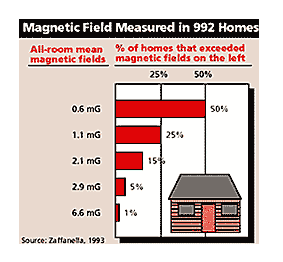 homes throughout the
United States. Half
of the houses
studied had magnetic
field measurements
of 0.6 mG or less,
when the average of
measurements from
all the rooms in the
house was calculated
(the all-room mean
magnetic field). The
all-room mean
magnetic field for
all houses studied
was 0.9 mG. The
measurements were
made away from
electrical
appliances and
reflect primarily
the fields from
household wiring and
outside power lines.
homes throughout the
United States. Half
of the houses
studied had magnetic
field measurements
of 0.6 mG or less,
when the average of
measurements from
all the rooms in the
house was calculated
(the all-room mean
magnetic field). The
all-room mean
magnetic field for
all houses studied
was 0.9 mG. The
measurements were
made away from
electrical
appliances and
reflect primarily
the fields from
household wiring and
outside power lines.