 |
Signature |
 |
Roofing
Roofs play a key role in protecting
building occupants and interiors from outside
weather conditions, primarily moisture. The roof,
insulation, and ventilation must all work together
 to keep the building free of moisture. Roofs also
provide protection from the sun. In fact, if
designed correctly, roof overhangs can protect the
buildings exterior walls from moisture and sun.The
concerns regarding moisture, standing water,
durability and appearance are different, reflected
in the choices of roofing materials.
to keep the building free of moisture. Roofs also
provide protection from the sun. In fact, if
designed correctly, roof overhangs can protect the
buildings exterior walls from moisture and sun.The
concerns regarding moisture, standing water,
durability and appearance are different, reflected
in the choices of roofing materials.
Maintaining Your Roof
Homeowner
maintenance includes cleaning the leaves and
debris from the roof’s valleys and gutters.
Debris in the valleys can cause water to wick
under the shingles and cause damage to the
interior of the roof. Clogged rain gutters can
cause water to flow back under the shingles on
the eaves and cause damage. Whatever the roofing
material may be including composition shingle,
wood shake, tile or metal. The best way to
preserve your roof is to stay off it. Also,
seasonal changes in the weather are usually the
most destructive forces.
There are two types of
roofs—flat and pitched (sloped). Most
commercial, industrial, and apartment
buildings have flat or slightly sloping
roofs. Most houses have pitched roofs. Some
roofers work on both types; others
specialize. Most flat roofs are covered with
several layers of materials. Roofers first
put a layer of insulation on the roof deck.
Over the insulation, they then spread a coat
of molten bitumen, a tarlike substance.
Next, they install partially overlapping
layers of roofing felt, a fabric saturated
in bitumen, over the surface. Roofers use a
mop to spread hot bitumen over the surface
and under the next layer. This seals the
seams and makes the surface watertight.
Roofers repeat these steps to build up the
desired number of layers, called “plies”.
The top layer either is glazed to make a
smooth finish or has gravel embedded in the
hot bitumen to create a rough surface. An
increasing number of flat roofs are covered
with a single-ply membrane of waterproof
rubber or thermoplastic compounds. Roofers
roll these sheets over the roof’s insulation
and seal the seams. Adhesive, mechanical
fasteners, or stone ballast hold the sheets
in place. The building must be of sufficient
strength to hold the ballast.
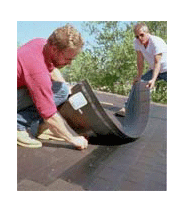
Most residential roofs are
covered with shingles. To apply shingles,
roofers first lay, cut, and tack 3-foot strips
of roofing felt lengthwise over the entire roof.
Then, starting from the bottom edge, they staple
or nail overlapping rows of shingles to the
roof. Workers measure and cut the felt and
shingles to fit intersecting roof surfaces and
to fit around vent pipes and chimneys. Wherever
two roof surfaces intersect, or shingles reach a
vent pipe or chimney, roofers cement or nail
flashing-strips of metal or shingle over the
joints to make them watertight. Finally, roofers
cover exposed nailheads with roofing cement or
caulking to prevent water leakage. Roofers who
use tile, metal shingles, or shakes follow a
similar process. Some roofers also waterproof
and dampproof masonry and concrete walls and
floors. To prepare surfaces for waterproofing,
they hammer and chisel away rough spots, or
remove them with a rubbing brick, before
applying a coat of liquid waterproofing
compound. They also may paint or spray surfaces
with a waterproofing material, or attach
waterproofing membrane to surfaces. When
dampproofing, they usually spray a bitumen-based
coating on interior or exterior surfaces.
A number of roofing
materials are available...
Asphalt
Asphalt is the most commonly used roofing material. Asphalt products include shingles, roll-roofing, built-up roofing, and modified bitumen membranes. Asphalt shingles are typically the most common and economical choice for residential roofing. They come in a variety of colors, shapes, and textures. There are four different types: strip, laminated, interlocking, and large individual shingles. Laminated shingles consist of more than one layer of tabs to provide extra thickness. Interlocking shingles are used to provide greater wind resistance. And large individual shingles generally come in rectangular and hexagonal shapes. Roll-roofing products are generally used in residential applications, mostly for underlayments and flashings. They come in four different types of material: smooth-surfaced, saturated felt, specialty-eaves flashings, and mineral-surfaced. Only mineral surfaced is used alone as a primary roof covering for small buildings like sheds. Smooth-surfaced products are used primarily as flashing to seal the roof at intersections and protrusions, and for providing extra deck protection at the roof's eaves and valleys. Saturated felt is used as an underlayment between the roof deck and the roofing material. Specialty-eaves flashings are typically used in climates where ice dams and water backups are common. Built-up roofing (or BUR) is the most popular choice of roofing used on commercial, industrial and institutional buildings. BUR is used on flat or low-sloped roofs and consists of multiple layers of bitumen and ply sheets. Components of a BUR system include the roof deck, a vapor retarder, insulation, membrane and surfacing material. A modified bitumen membrane assembly consists of continuous plies of saturated felts, coated felts, fabrics or mats between which alternate layers of bitumen are applied, either surfaced or unsurfaced. Factory surfacing, if applied, includes mineral granules, slag, aluminum or copper. The bitumen determines the membrane's physical characteristics and provides primary waterproofing protection, while the reinforcement adds strength, puncture resistance and overall system integrity.
Metal
Most metal roofing products consist of steel or aluminum, although some consist of copper and other metals. Steel is invariably galvanized by the application of a zinc or zinc/aluminum coating, which greatly reduces the rate of corrosion. Metal roofing is available as traditional seam and batten, tiles, shingles, and shakes. Products also come in a variety of styles and colors. Metal roofs with solid sheathing control noise from rain, hail, and bad weather just as well as any other roofing material. Metal roofing can also help eliminate ice damming at the eves. And in wildfire-prone areas, metal roofing helps protect buildings from fire should burning embers land on the roof. Metal roofing costs more than asphalt, but it typically lasts 2 to 3 times longer than asphalt or wood shingles.
Wood
Wood shakes offer a natural look with a lot of character. Because of variations like color, width, thickness, or cut of the wood, no two shake roofs will ever be the same. Wood offers some energy benefits, too. It helps to insulate the attic, and it allows the house to breathe, circulating air through the small openings under the felt rows on which wooden shingles are laid. A wood shake roof, however, demands proper maintenance and repair, or it will not last as long as other products. Mold, rot, and insects can be a problem. The life cycle cost of a shake roof may be high, and old shakes can't be recycled. Most wood shakes are unrated by fire safety codes. Many use wipe or spray-on fire retardants, which offer less protection and are only effective for a few years. Some pressure-treated shakes are impregnated with fire retardant and meet national fire safety standards. Installing wood shakes is more complicated than roofing with composite shingles, and the quality of the finished roof depends on the experience of the contractor as well as the caliber of the shakes you use. The best shakes come from the heartwood of large old cedar trees, which are difficult to find. Some contractors maintain that shakes made from the outer wood of smaller cedars, the usual source today, are less uniform, more subject to twisting and warping, and don't last as long. Concrete and Tile Concrete tiles are made of extruded concrete that is colored. Traditional roofing tiles are made from clay. Concrete and clay tile roofing systems are durable, aesthetically appealing, and low in maintenance. They also provide energy savings and are environmentally friendly. Although material and installation costs are higher for concrete and clay tile roofs, when evaluated on a price versus performance basis, they may out perform other roofing materials. Tile adorns the roofs of many historic buildings as well as modern structures. In fact, because of its extreme durability, longevity, and safety, roof tile is the most prevalent roofing material in the world. Tested over centuries, roof tile can successfully withstand the most extreme weather conditions including hail, high wind, earthquakes, scorching heat, and harsh freeze-thaw cycles. Concrete and clay roof tiles also have unconditional Class A fire ratings, which means that, when installed according to building code, roof tile is non-combustible and maintains that quality throughout its lifetime. In recent years, manufacturers have developed new water-shedding techniques and, for high-wind situations, new adhesives and mechanical fasteners. Because the ultimate longevity of a tile roof also depends on the quality of the sub-roof, roof tile manufacturers are also working to improve flashings and other aspects of the underlayment system. Under normal circumstances, properly installed tile roofs are virtually maintenance free. Unlike other roofing materials, roof tiles actually become stronger over time. Because of roof tile's superior quality and minimal maintenance requirements, most roof tile manufacturers offer warranties that range from 50 years to the lifetime of the structure.
Concrete and clay tile roofing
systems are also energy efficient, helping to
maintain livable interior temperatures (in both
cold and warm climates) at a lower cost than
other roofing systems. Because of the thermal
capacity of roof tiles and the ventilated air
space that their placement on the roof surface
creates, a tile roof can lower air conditioning
costs in hotter climates and produce more
constant temperatures in colder regions, which
reduces potential ice accumulation. Tile roofing
systems are made from naturally occurring
materials and can be easily recycled into new
tiles or other useful products. They are
produced without the use of chemical
preservatives, and do not deplete limited
natural resources.
Single-Ply Single-ply membranes are flexible sheets of compounded synthetic materials that are manufactured in a factory. There are three types of membranes: thermosets, thermoplastics, and modified bitumens. These materials provide strength, flexibility, and long-lasting durability. The advantages of pre-fabricated sheets are the consistency of the product quality, the versatility in their attachment methods, and therefore, their broader applicability. They are inherently flexible, used in a variety of attachment systems, and compounded for long lasting durability and watertight integrity for years of roof life. Thermoset membranes are compounded from rubber polymers. The most commonly used polymer is EPDM (often referred to as "rubber roofing"). Thermoset membranes make successful roofing materials because they can withstand the potentially damaging effects of sunlight and most common chemicals generally found on roofs. The easiest way to identify a thermoset membrane is by its seams, it requires the use of adhesive, either liquid or tape, to form a watertight seal at the overlaps. Thermoplastic membranes are based on plastic polymers. The most common thermoplastic is PVC (polyvinyl chloride) which has been made flexible through the inclusion of certain ingredients called plasticizers. Thermoplastic membranes are identified by seams that are formed using either heat or chemical welding. These seams are as strong or stronger than the membrane itself. Most thermoplastic membranes are manufactured to include a reinforcement layer, usually polyester or fiberglass, which provides increased strength and dimensional stability. Modified bitumen membranes are hybrids that incorporate the high tech formulation and prefabrication advantages of single-ply with some of the traditional installation techniques used in built-up roofing. These materials are factory-fabricated layers of asphalt, "modified" using a rubber or plastic ingredient for increased flexibility, and combined with reinforcement for added strength and stability. There are two primary modifiers used today: aPP (atactic polypropylene) and SBS (styrene butadiene styrene). The type of modifier used may determine the method of sheet installation. Some are mopped down using hot asphalt and some use torches to melt the asphalt so that it flows onto the substrate. The seams are sealed by the same technique. Are You at Risk?
If you aren't sure whether your
house is at risk from natural disasters, check
with your local fire marshall, building
official, city engineer, or planning and zoning
administrator. They can tell you whether you are
in a hazard area. Also, they usually can tell
you how to protect yourself and your house and
property from damage. Protection can involve a
variety of changes to your house and property,
changes that can vary in complexity and cost.
You may be able to make some types of changes
yourself. But complicated or large-scale changes
and those that affect the structure of your
house or its electrical wiring and plumbing
should be carried out only by a professional
contractor licensed to work in your state,
county, or city. One example is fire protection,
by replacing flammable roofing materials with
fire-resistant materials. This is something that
most homeowners would probably hire a contractor
to do.
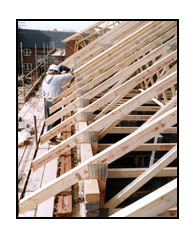
The age of your roof is usually the
major factor in determining when to replace it. Most
roofs last many years if properly installed and
often can be repaired rather than replaced. An
isolated leak usually can be repaired. The average
life expectancy of a typical residential roof is 15
to 20 years. Water damage to a home’s interior or
overhangs is commonly caused by leaks from a single
weathered portion of the roof, poorly installed
flashing, or from around chimneys and skylights.
These problems do not necessarily mean you need a
new roof.
Fire-Resistant Materials
Some roofing materials, including
asphalt shingles and especially wood shakes, are
less resistant to fire than others. When
wildfires and brush fires spread to houses, it
is often because burning branches, leaves, and
other debris buoyed by the heated air and
carried by the wind fall on roofs. If the roof
of your house is covered with wood or asphalt
shingles, you should consider replacing them
with fire-resistant materials. You can replace
your existing roofing materials with slate,
terra cotta or other types of tile, or
standing-seam metal roofing. Replacing roofing
materials is difficult and dangerous work.
Unless you are skilled in roofing and have all
the necessary tools and equipment, you will
probably want to hire a roofing contractor to do
the work. Also a roofing contractor can advise
you on the relative advantages and disadvantages
of various fire-resistant roofing materials.
Hiring a Licensed Contractor
One of the best ways to select a
roofing contractor is to ask friends or relatives
for recommendations. You may also contact a
professional roofers association for referrals.
Professional associations have stringent guidelines
for their members to follow. The roofers association
in your area will provide you with a list of
available contractors. Follow these guidlines when
selecting a contractor...
You’ve Chosen the
Contractor... What About the Contract?
Make sure everything is in writing.
The contract is one of the best ways to prevent
problems before you begin. The contract protects you
and the contractor by including everything you have
both agreed upon. Get all promises in writing and
spell out exactly what the contractor will and will
not do.
...and Permits?
Your contract should call for all
work to be performed in accordance with all
applicable building codes. The building codes set
minimum safety standards for construction.
Generally, a building permit is require whenever
structural work is involved. The contractor should
obtain all necessary building permits. If this is
not specified in the contract, you may be held
legally responsible for failure to obtain the
required permit. The building department will
inspect your roof when the project has reached a
certain stage and again whe the roof is completed.
...and Insurance?
Make sure the contractor carries
worker’s compensation insurance and general
liability insurance in case of accidents on the job.
Ask to have copies of these policies for your job
file. You should protect yourself from mechanics’
lien against your home in the event the contractor
does no pay subcontractors or material suppliers.
You may be able to protect yourself by having a
release of lien clause in your contract. A release
of lien clause requires the contractor,
subcontractors and suppliers to furnish a
certificate of waiver of lien. If you are financing
your project, the bank or lending institution may
require that the contractor, subcontractors and
suppliers verify that they have been paid, before
releasing funds for subsequent phases of the
project. A leaky roof can damage ceilings, walls,
and furnishings. To protect buildings and their
contents from water damage, roofers repair and
install roofs made of tar or asphalt and gravel;
rubber or thermoplastic; metal; or shingles made of
asphalt, slate, fiberglass, wood, tile, or other
material. Roofers also may waterproof foundation
walls and floors.
Keep these points in mind if you plan
to have your existing roofing materials replaced:
For
the
best
inspector
in
your
neighborhood
visit
www.InspectorLocator.com
|
|
|
|
|
|
George Timmerman CHI - CMIA* 280 Kemp RD * Suwanee GA 30024 * (470) 545-9824 |